
Most people have the same fear about wedding photos: looking stiff, awkward, or fake. And that fear is justified because most wedding posing advice tells you to do things that feel unnatural. Tilt your head 45 degrees. Put your weight on your back foot. Angle your shoulders. You end up thinking about geometry instead of feeling your own wedding day.
The reality is that the best wedding photographs are not about poses at all. They are about movements, interactions, and genuine moments that the photographer captures while you are focused on each other rather than on the camera. Here is how to make that happen.
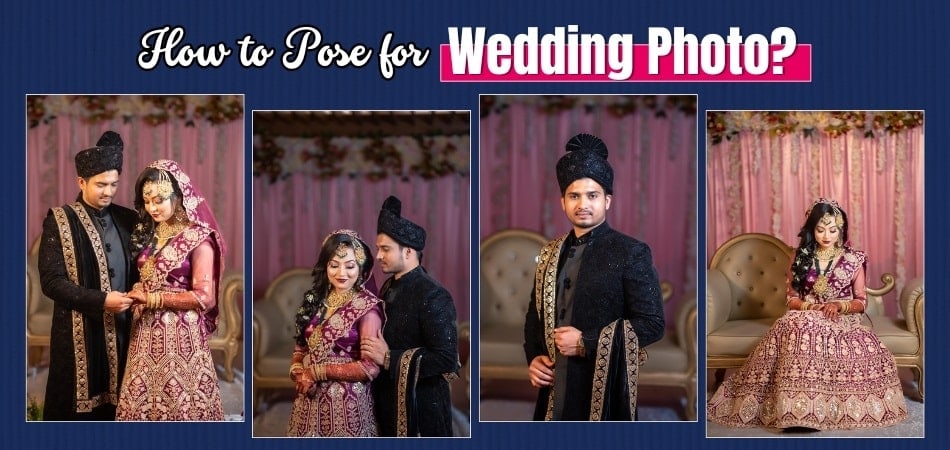
The Core Principle: Movement Over Position
Static poses produce static photographs. When a photographer tells you to stand still and smile, the result is a formal record that looks like every other formal wedding photo. When they ask you to walk toward each other, whisper something that makes your partner laugh, or slow dance without music, the result is a photograph with life in it.
Tell your photographer before the wedding that you prefer movement based direction over fixed poses. Most experienced wedding photographers already work this way, but stating it explicitly sets the tone for the entire session.
For the Couple
- Walk together slowly, holding hands. Do not look at the camera. Look at each other or look ahead. The photographer will capture the natural stride and the way your bodies relate to each other.
- The forehead touch. Stand facing each other, close your eyes, and let your foreheads meet. Breathe. This creates an image of intimacy that no staged pose can replicate because the emotion is real.
- The whisper. One partner leans in and whispers something to the other. It does not matter what you say. A joke works best because the resulting smile is genuine.
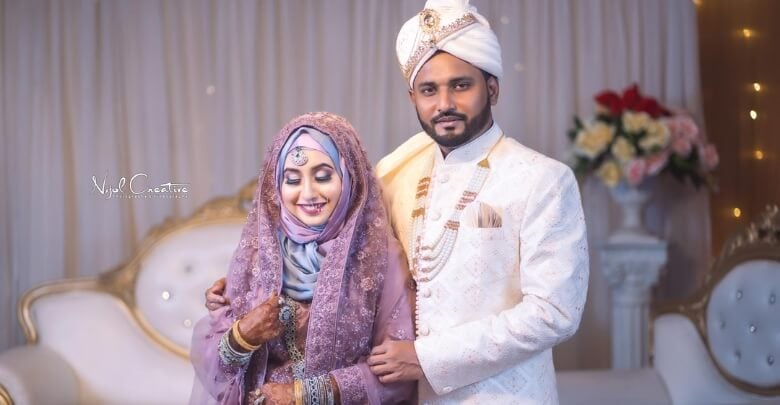
- The from behind embrace. One partner stands behind the other, arms wrapped around the waist, chin resting on the shoulder. This feels natural because it is a position couples actually occupy in real life.
- Look away from the camera together. Face the same direction and look at something in the distance. This creates a storytelling composition where you become characters in a scene rather than subjects of a portrait.
For the Bride
Bridal portraits in Bangladeshi weddings carry additional cultural weight. The bride’s outfit, jewelry, and mehndi represent weeks or months of preparation. The photographer needs to capture both the person and the artistry.
- Hand placement matters. Rest your hands naturally at your sides, or lightly touch your dupatta or jewelry. Avoid gripping the bouquet like a lifeline. Hold it low and loose.
- Shoulder awareness. A slight turn of the shoulders, about 30 degrees from the camera, creates a more flattering silhouette and shows the outfit’s detail from an angle rather than straight on.
- The genuine smile starts in the eyes. If you are struggling with a natural expression, close your eyes for a moment, take a breath, and open them. The first two seconds after opening your eyes produce the most relaxed expression.
- Show the mehndi. One of the most photographed details at a Bangladeshi wedding. Rather than holding your hands up flat to the camera, let the photographer capture them naturally as you adjust your outfit, hold your partner’s hand, or rest them in your lap.
For the Groom
Groom portraits often feel like an afterthought, but they should not be. The groom’s outfit, whether a sherwani, suit, or traditional panjabi, has its own details worth capturing.
- Stand tall and relax your shoulders. The most common groom posing mistake is standing with military rigidity. Shift your weight to one foot and let your arms hang naturally.
- Use your hands. Adjust a cufflink, straighten your lapel, or put one hand in your trouser pocket. These micro movements create visual interest and prevent the locked arms problem.
- Do not force a smile. A calm, composed expression is perfectly acceptable for groom portraits. Not every photo needs teeth.
Group Photo Survival Guide
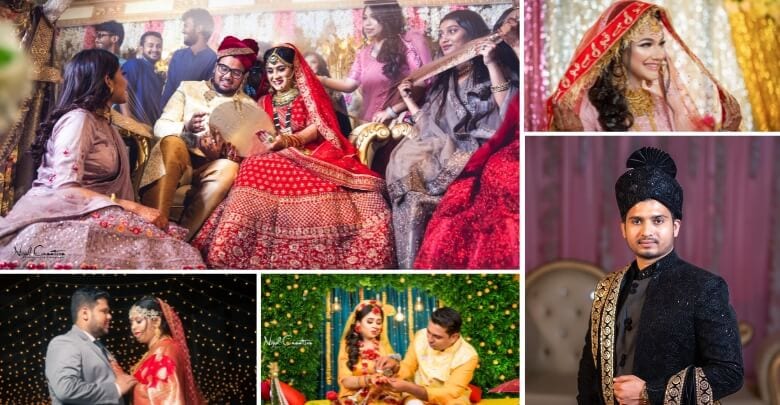
Group photos at Bangladeshi weddings are the most logistically challenging part of the photography timeline. You have extended family members who need to be arranged, children who will not stand still, and elders who may need seating. Here is how to make group photos less painful for everyone.
- Designate a family coordinator on each side. This person knows everyone by name and can call specific groups forward efficiently.
- Arrange by height, not by relationship hierarchy. The photograph needs to look balanced visually. Tall people in the back, shorter people and children in front. Family politics can be addressed in the seating chart, not the photo arrangement.
- The photographer should take three to five shots of every group. Someone always blinks, looks away, or sneezes. Multiple captures ensure at least one usable frame.
- Keep group sessions under 30 minutes total. Beyond that, everyone’s patience and energy drops noticeably, and the expressions in the later photos show it.
What to Practice Before the Wedding
Spend fifteen minutes in front of a mirror a week before the wedding. Not rehearsing poses, but getting familiar with your face and body in formal clothing. Put on a similar outfit and see how you naturally stand, where your hands go, what your resting expression looks like. This awareness eliminates the shock of seeing yourself in unfamiliar formalwear for the first time on the actual day.
If you booked a pre wedding shoot, treat it as rehearsal. Tell your photographer you want to experiment with different approaches so you know what works for you before the wedding day. The pre wedding session is low pressure, and the learning transfers directly.
Related: Types of Wedding Photography Styles
Related: How to Take Wedding Photos for the First Time
Frequently Asked Questions
Should I practice specific poses before the wedding?
Practice awareness, not poses. Spend time in your formal outfit in front of a mirror so your body knows how to move in it naturally. Let the photographer guide specific positioning on the day. Your job is to be comfortable and present. Their job is to find the angles.
What if I feel awkward during the photo session?
Tell your photographer. A good professional recognizes stiffness and switches to movement based direction, walking, interacting, adjusting wardrobe details, to break the tension. Awkwardness usually disappears within the first five minutes if the photographer keeps you active instead of stationary.
How long should couple portraits take?
Plan for 30 to 45 minutes of dedicated couple portrait time. This sounds like a lot, but the first ten minutes are warm up. The best images almost always come from the last fifteen minutes when you have forgotten the camera is there.