
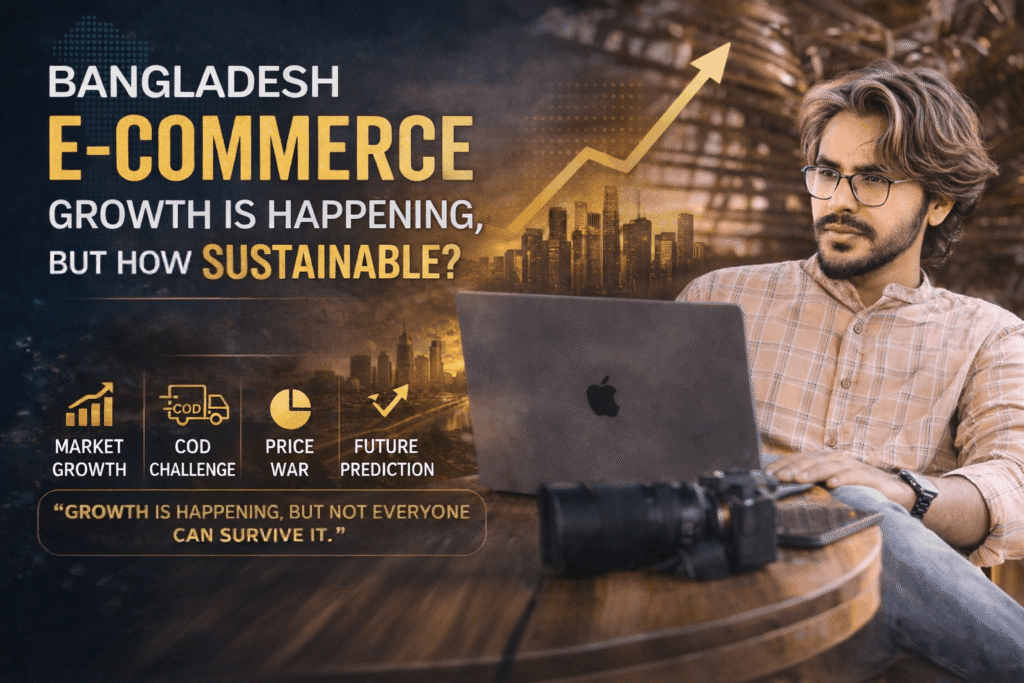
Is Bangladesh’s E-commerce Growth Truly Sustainable, or Just Rapid Expansion Without Foundation?
Growth always looks exciting. More orders, more sellers, more visibility. On the surface, Bangladesh’s e-commerce sector feels like it is booming in all directions.
But here is the real question that matters: how strong is the foundation behind that growth?
Because growth alone does not build a lasting market. Structure does.
This insight comes from years of working inside the ecosystem where e-commerce actually takes shape. Photography, videography, content production, branding, and digital marketing are not just support functions. They define how products are perceived, trusted, and sold.
With nearly two decades of experience working with e-commerce brands, f-commerce entrepreneurs, and product-based businesses, one thing becomes very clear. Not every growth curve leads to sustainability.
Bangladesh E-commerce Market Overview: Big Numbers, Bigger Expectations
The Bangladesh e-commerce market is no longer emerging. It is already a significant economic force.
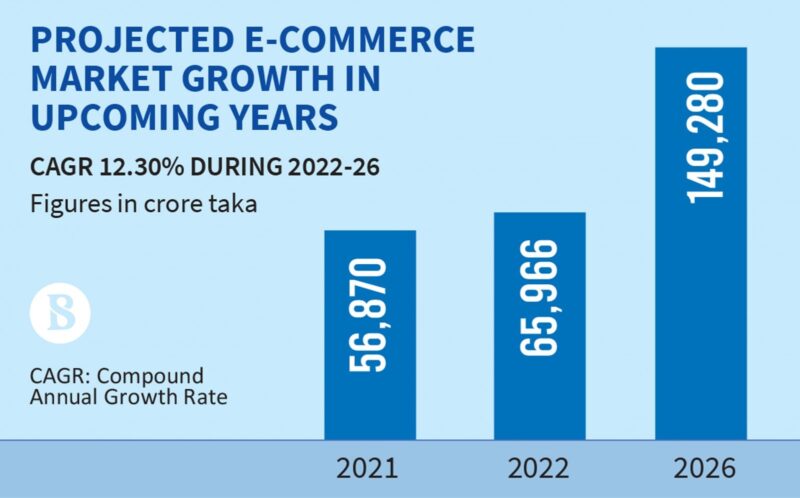
Current estimates place the market size between 6 to 7.5 billion dollars, with projections pushing toward 9 to 10 billion dollars within the next few years. Online buyers are increasing steadily, driven by smartphone penetration, social media usage, and improved logistics.
Yet one statistic reveals a deeper structural reality. Around 70 to 75 percent of orders still rely on Cash on Delivery.
This tells us two things at once. Demand is strong, and trust is still developing.
So yes, e-commerce growth in Bangladesh is real. But sustainability depends on what is happening behind these numbers.
The Core Problem: Growth Without Structure
At a glance, everything looks healthy. But when you look closer, cracks start to appear. These are not surface-level issues. They are structural.
1. Easy Entry, Difficult Survival
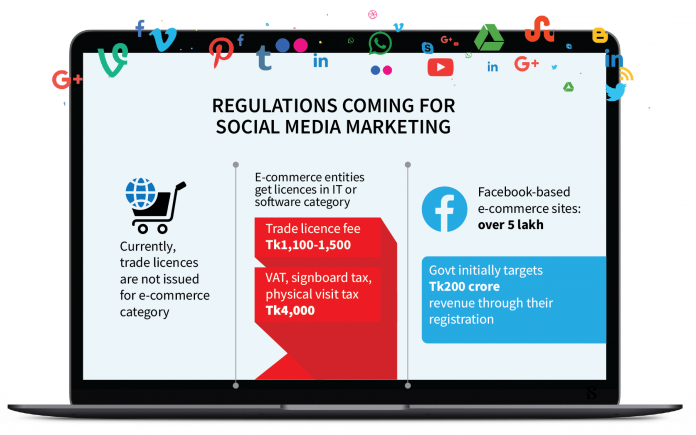
Starting an online business in Bangladesh has never been easier. A Facebook page, a few product photos, and you are live.
This accessibility is powerful. It encourages entrepreneurship and brings new players into the market.
But here is the trade-off.
Many sellers enter without understanding product-market fit, pricing strategy, or customer psychology. The result is a crowded marketplace filled with similar offerings and inconsistent quality.
What this really means is simple. More sellers do not always mean a stronger market. Sometimes it just creates noise.
2. Visibility Is No Longer Free
Organic reach once drove a significant portion of sales. That era is fading.
Today, visibility is largely paid. Advertising dominates discovery.
But here is where many businesses struggle. They run ads without understanding unit economics. They measure sales but ignore profitability.
It is common to see brands celebrating revenue growth while quietly losing margin through inefficient ad spend.
This is one of the biggest hidden risks in digital commerce Bangladesh. Sales without profit do not build sustainability.
3. Cash on Delivery: Necessary but Costly

Cash on Delivery remains essential in Bangladesh. It lowers the barrier to purchase and builds initial trust.
But it comes with operational challenges.
Return rates are high. Fake orders exist. Cash flow gets delayed. Working capital becomes tied up in the delivery cycle.
Removing COD is not the solution. That would hurt conversion.
The smarter approach is optimization. Partial advance payments, better verification systems, and customer profiling can significantly reduce inefficiencies.
4. The Dangerous Race to the Bottom
One of the most visible issues in f-commerce Bangladesh is aggressive price competition.
Multiple sellers offer identical or near-identical products. Without differentiation, price becomes the only lever.
Margins shrink. Profitability drops. Long-term brand value disappears.
Here is the uncomfortable truth. If your only advantage is price, your business is always at risk.
5. Import Without Value Addition
Importing products is not a problem. In fact, it fuels product variety.
The issue arises when there is no value addition. No branding, no packaging innovation, no storytelling, no customer experience.
When everyone sells the same imported product, the market saturates quickly. Prices drop, competition intensifies, and sustainability weakens.
What this really means is that product alone is no longer enough. Experience is what differentiates.
The Question Every Business Must Answer
Why would a customer come back to you?
Not just buy once. Come back.
Do you offer something unique? Is there trust? Is the experience consistent?
If the answer is unclear, then the business is likely operating on short-term transactions, not long-term relationships.
And without repeat customers, sustainable growth becomes nearly impossible.
Revenue Is Not Profit: A Reality Check
Many businesses focus on top-line growth. Revenue looks impressive.
But when you factor in return losses, ad inefficiency, customer support costs, and inventory risks, the picture changes.
A large portion of sellers in the online business BD ecosystem are generating revenue without building profit.
This is where data becomes critical. Without tracking metrics like customer acquisition cost, lifetime value, and return rate, decision-making becomes guesswork.
And guesswork does not scale.
Who Will Win in the Next 5 Years?
The market will grow. That is almost certain.
But not everyone will grow with it.
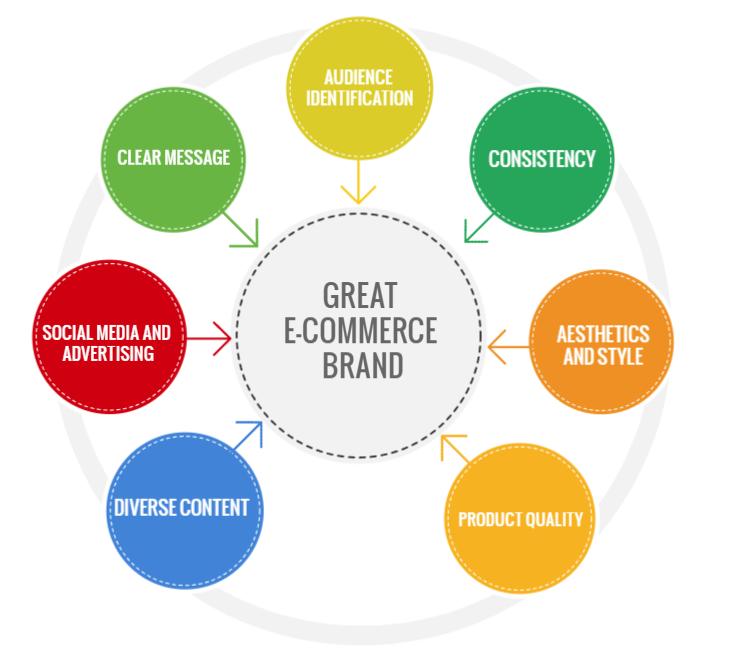
The businesses that survive and scale will follow a different approach. They will understand their niche deeply. They will build strong brand identity. They will focus on customer retention, not just acquisition.
They will rely on data, not assumptions. And most importantly, they will prioritize trust.
On the other hand, businesses that depend purely on copying products, relying only on Facebook, or running ads without strategy will struggle to sustain.
What Needs to Change: Expert Recommendations
If the goal is to build a sustainable e-commerce ecosystem in Bangladesh, several shifts need to happen.
First, trust must become a core system, not an afterthought. Clear policies, reliable delivery, and transparent communication should define every customer interaction.
Second, business education needs to improve. Entrepreneurs must understand pricing models, cost structures, and customer lifecycle dynamics.
Third, Cash on Delivery should evolve. Smarter systems such as partial prepayment and improved order verification can reduce risk significantly.
Fourth, a brand-first mindset is essential. Businesses should focus on selling an experience, not just a product.
Finally, decisions must be driven by data. Guessing is no longer viable in a competitive market.
The Bigger Picture: Opportunity Still Exists
Despite these challenges, the potential of Bangladesh e-commerce remains enormous.
This sector is not just about online shopping. It is a key driver of the country’s digital economy. It creates jobs, supports entrepreneurs, and connects consumers to a wider marketplace.
But potential alone is not enough.
For this industry to truly thrive, it needs structure, accountability, and responsible leadership.
Final Thoughts
Bangladesh’s e-commerce industry is at a turning point.
The growth phase has already begun. The next phase is about sustainability.
Businesses that adapt, build trust, and think long-term will define the future of this market.
Those that chase short-term sales without strategy may not survive the next wave.
The opportunity is real. But so is the challenge.