
Not every corporate event requires the same level of photography coverage. An internal team lunch and a product launch in front of 500 people are fundamentally different in terms of documentation needs, audience expectations, and how the images will be used afterwards.
The question is not whether an event should be photographed. In 2025, virtually every corporate gathering has documentation value. The question is what level of coverage each event type demands. Some events need a full photography team with professional lighting. Others are well served by a skilled solo photographer with a single camera.
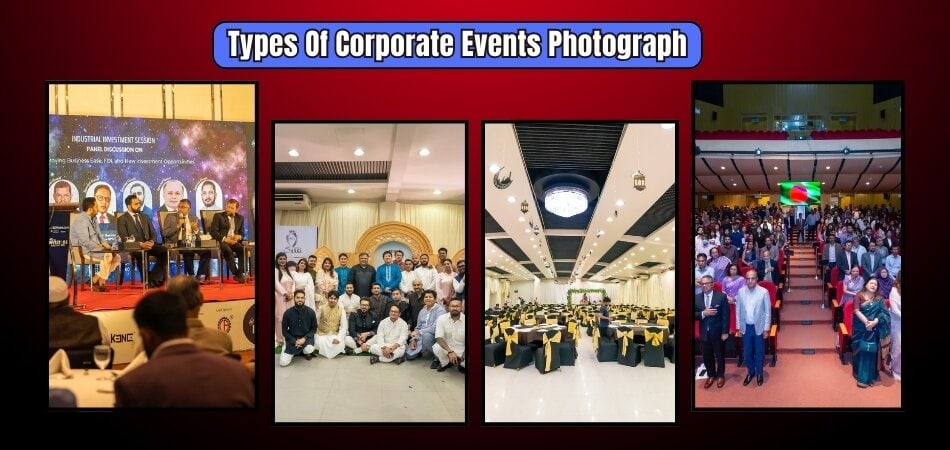
Here are the corporate event types that benefit most from professional photography, along with what each one requires.
Conferences and Industry Summits
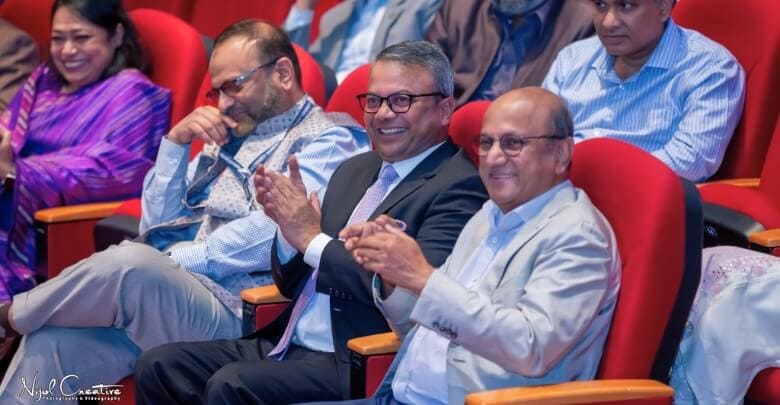
Conferences are the most photography intensive corporate events. They combine multiple content types: keynote presentations, panel discussions, breakout sessions, exhibition areas, networking breaks, and often a formal dinner or awards component.
A full day conference typically requires two photographers working in coordination. One covers the main stage while the other documents simultaneous breakout sessions, sponsor activations, and attendee interactions. The deliverables serve multiple purposes: social media during the event, post event marketing campaigns, annual reports, speaker promotion, and sponsor fulfillment packages.
In Bangladesh, conferences have grown significantly as a marketing channel. Companies in Dhaka and Chattogram are investing more in professionally documented conferences because the content generated from a single event feeds their marketing pipeline for months.
Product Launches
A product launch is a controlled moment designed for maximum impact. The photography needs are intense but focused. Every frame needs to capture the energy of the reveal, the reactions of the audience, the product itself in its best light, and the media coverage.
Product launch photography demands a photographer who understands both corporate event coverage and product photography. The ability to switch from documenting a keynote speaker to capturing a close up product detail within seconds separates professional corporate photographers from general event photographers.
Deliverables from product launches often have the highest per image value of any corporate event type. A single strong image of the product reveal moment may be used across press releases, social media campaigns, website banners, and advertising materials for months or years.

Award Ceremonies and Galas
These events are defined by their emotional moments. The announcement, the reaction, the handshake, the trophy presentation. Missing any of these is unforgivable because they cannot be recreated.
Gala photography requires technical skill in challenging lighting conditions. Atmospheric venue lighting, stage spotlights, and dark audience areas create extreme contrast that pushes camera settings to their limits. A photographer who cannot handle low light confidently will miss critical moments.
Beyond the stage, gala coverage includes table settings, venue decor, candid social interactions, and VIP arrivals. The full set of images documents both the formal program and the social experience of the evening.
Corporate Training Programs and Workshops
Training events are often overlooked for professional photography, but they serve an important branding function. Images of employee development activities demonstrate corporate investment in people. They strengthen employer branding, recruitment marketing, and internal communications.
The photography needs are modest compared to conferences or galas. A solo photographer covering key instructional moments, participant engagement, and group activities typically produces a sufficient set of images. The value is in having professional quality documentation rather than phone snapshots that look unprofessional in annual reports or LinkedIn posts.
Trade Shows and Exhibitions
Trade show photography has a dual purpose: documenting your company’s presence and capturing competitive intelligence about the event landscape. A photographer covering your booth captures product displays, client interactions, live demonstrations, and the traffic flow around your exhibition space.
The most valuable trade show images are not the posed booth staff photos. They are the candid moments of genuine client engagement: a prospect examining your product closely, a demonstration drawing a crowd, a one on one conversation that later converts into a deal. These images provide social proof for future marketing.
Annual General Meetings and Shareholder Events
AGMs carry institutional weight. The photography documents governance processes, leadership visibility, and corporate milestones. These images serve investor relations, regulatory documentation, and corporate history records.
The approach is formal and restrained. A single photographer capturing key speakers, voting moments, milestone announcements, and leadership group photos. The images need to project authority and institutional stability. This is not the event for creative or experimental photography.
Corporate Social Responsibility Events
CSR photography serves a specific purpose: demonstrating authentic community engagement. The emphasis is on genuine interaction between company representatives and community participants, not staged photo opportunities.
Professional CSR photography requires cultural sensitivity, especially in Bangladesh where community events involve diverse socioeconomic backgrounds. The best CSR images show real impact and real connection. Stock photo aesthetics undermine the authenticity that makes CSR photography valuable.
Team Building Activities and Company Retreats
Team building photography captures company culture in action. These images are primarily used for internal communications, recruitment materials, and employer branding on social media and careers pages.
The style is more relaxed than formal corporate event photography. Candid moments, group activities, team celebrations, and environmental shots of the retreat location all contribute to a visual story about company culture. The challenge is capturing genuine moments without making participants feel observed or staged.
How to Decide the Right Coverage Level
Match the photography investment to the image usage plan. Ask two questions before every event:
- Who will see these images? If the audience is external (clients, media, investors, social media followers), invest in professional coverage. If purely internal, a lighter approach may suffice.
- How long will these images be used? A product launch generating images for a year long campaign justifies premium coverage. A routine internal meeting needs basic documentation only.
For a comprehensive overview of corporate event photography and how it supports your broader marketing strategy, read our complete guide to corporate event photography in Bangladesh.
Frequently Asked Questions
Q: Do small corporate events need professional photography?
A: It depends on how the images will be used. A small team meeting documented for internal records does not require professional coverage. A small VIP client dinner, however, generates high value images for relationship marketing and social proof. Match the investment to the image’s future audience and purpose.
Q: Which corporate event type generates the most usable marketing content?
A: Conferences and product launches consistently produce the highest volume of diverse, reusable marketing content. A single conference generates speaker portraits, candid networking shots, branding images, venue atmosphere photos, and social proof content that feeds multiple marketing channels for months.
Q: Can one photographer cover a large corporate event alone?
A: For events with fewer than 100 attendees in a single venue with sequential (not simultaneous) sessions, a skilled solo photographer provides adequate coverage. For larger events, multi track conferences, or events spanning multiple rooms, two photographers working in coordination deliver significantly more complete coverage.